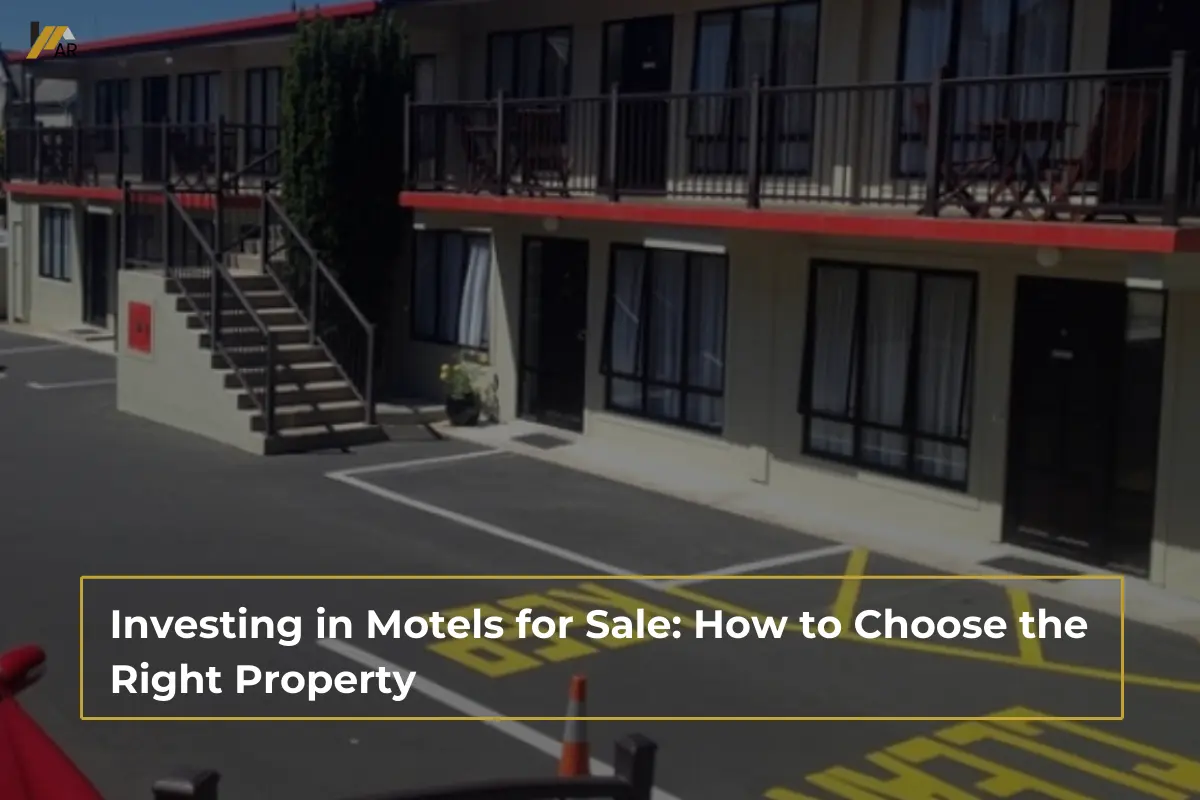
If you’ve been browsing motels for sale as an investment opportunity, you’re not alone—and you’re smart to pause and question how to choose the right property before diving in. Owning a motel can deliver solid returns, diversification and even a hands-on lifestyle business, but the risks are non-trivial and the wrong choice can weigh you down. In this article, we’ll walk you through the exact steps and considerations for evaluating motels for sale: from location and condition to financing, valuation and operations. You’ll gain a concrete roadmap, understand key pitfalls, and be equipped to identify motel investment properties—from listings of motels for sale near me to budget motherships at motels for sale under $50,000. Let’s start by mapping out why this asset class appeals, and then dig into how you separate the winners from the rest.
1. Why Consider Motels for Sale as an Investment?
Investing in motels for sale can be attractive for several reasons. First, unlike typical residential rental properties, a motel is a short-term lodging business: each room can be turned over multiple times per year, which, in a decent location, means you’re not solely relying on long‐term leases. According to industry overviews, motels can deliver consistent cash flow and offer value-add potential (via renovations, improved operations) when properly managed.
Second, the hospitality niche often appeals to entrepreneurs who want both real estate and operating business exposure. Owning motels for sale means you’re buying property + business, which can offer higher margins (but also more work). Third, there is a potential for appreciation: in growing travel markets, motels that improve occupancy or upgrade room quality often increase in value.
However, this isn’t a passive real estate play. Motels for Sale depend on guest traffic, seasonality, management quality, and ongoing maintenance. As one motel investor reflected after buying a 51-room motel: “Buying a business isn’t a straightforward process” given staff, systems, and operational risk.
In short: motels for sale can be compelling—but success depends heavily on the right property choice and execution.
2. Define Your Investment Goals and Budget
Before you even begin scanning listings of motels for sale near me or motels for sale under $50,000, it’s essential to clarify your purpose and financial capacity. Ask yourself:
- Am I buying primarily for cash flow, or for future resale value?
- Do I want to operate the property myself (hands-on), or hire a manager (semi-passive)?
- What is my budget for purchase, plus immediate renovation, plus operating working capital?
- What level of risk am I comfortable with?
Setting clear goals helps you filter properties. For example, if you want motels for sale under $50,000 that can be turned around quickly, you’ll likely be targeting small properties in secondary markets needing work. If your budget is higher, you might aim for a larger motel in a strong tourist corridor.
Also: identify financing limits early. Many motel acquisitions will require a mix of equity, debt, and possibly renovation capital. Early engagement with lenders or brokers helps avoid wasting time on properties outside your affordability.
Clear goal-setting ensures when you see an ad like “hotels for sale near me” you evaluate it efficiently, and don’t get distracted by glamour over substance.
3. Location Matters—Understand the Market Dynamics

As with any real estate, location is king but in motel investment the stakes are higher because your success depends on traffic, demand drivers, and occupancy. Here are location criteria to hone:
Demand drivers
- Proximity to highways, interstates, airports, major tourist attractions or business hubs. A motel on a well-traveled road will have more built-in demand.
- Seasonal vs year-round markets: If you buy a motel in a resort town with a short season, you’ll need to ensure during the off-season you still cover costs.
- Competition and supply pipeline: Are there many motels or hotels around? Is new lodging being developed? Oversupply can push down occupancy and rates.
Neighborhood and accessibility
- Visibility and ease of access matter. A property that’s tucked away or hard to find will underperform.
- Surrounding amenities: dining, gas, convenience stores, local attractions. Guests value convenience.
- Local economic health: population growth, employment rates, tourism trends. A motel in a shrinking or stagnant region is riskier.
Market benchmarking
When you spot listings of motels for sale near me, don’t rely on the advertised summary alone. Pull comparative data: What are typical occupancy rates in that market? What is ADR (average daily rate)? What are the trends? In hotel investments, ADR and RevPAR (revenue per available room) are key metrics.
For example, a motel with 30 rooms in a market with 70% occupancy at US$80 average rate will produce differing cash flow than one in a 40% occupancy market at US$45 rate. Always quantify.
Case-in-point
An investor might find “motels for sale under $50,000” listing in a small rural town. That low price might reflect minimal demand and low rates, which could mean slim margins or worse, cash-flow negative. Conversely, a higher priced motel near an interstate exit with tourist pull may command strong occupancy but comes with higher entry cost.
In summary: assess location not just as “where” but “why demand exists here” and “can I sustain or improve that demand”.
4. Property Condition, Value-Add Potential and Risk
Once you’ve found a promising market, getting into the specifics of the motel for sale is next. Property condition and value-add potential determine how much additional investment you’ll need—and what your risk looks like.
Condition and renewal needs
- Inspect the building shell, roof, HVAC systems, plumbing, electrical. Deferred maintenance can eat up budget fast.
- Rooms and furnishings: Does the motel need a refresh to meet guest expectations? Old décor, worn bedding, weak wifi—all these can limit occupancy or rates.
- Exterior and grounds: Curb appeal matters. A motel with an unattractive exterior will struggle to command rate or reviews.
Value-add potential
- Does the motel have under-utilised space (conference room, restaurant, parking lot) you could convert?
- Are room rates significantly below comparable motels in the market, meaning you could raise them after improvements?
- Could you reposition the motel (e.g., from budget to boutique) or align with a mid-tier brand?
- Are there operational inefficiencies that a new owner could fix (e.g., staffing, expense controls, marketing)?
Risk assessment
- Beware hidden structural issues or compliance problems (zoning, fire safety, ADA).
- If the motel is very outdated and the market expects newer rooms, the cost to renovate may be prohibitive.
- If you buy motels for sale under $50,000 because they are distressed, you may face higher operational risk and uncertain cash flow until you fix or reposition.
- Also consider external risks: travel patterns can shift, petrol prices influence road-travel motels, pandemics or economic downturns can hit occupancy. The hotel investment guide notes that hospitality properties are more volatile than standard real estate.
Quick calculation
Say you buy a 20-room motel for US$400,000. After purchase you budget US$100,000 for renovation. Total outlay = US$500,000. If, after improvements, you achieve 60% occupancy at US$90 ADR: annual room revenue = 20 rooms × 365 days × 60% × US$90 ≈ US$394,200. If operating expenses + debt service + reserves = US$250,000 → net ~US$144,200 → ROI ≈ 28.8%. But if you only hit 40% occupancy or ADR drops to US$70, you fall short. This shows the sensitivity to occupancy & rate.
5. Financial Analysis & Valuation: How Much Should You Pay?
When looking at motels for sale, one of your most important jobs is to estimate how much you should pay—not just the listing price. This requires understanding both real-estate value and business value (operations, cash flow).
Key metrics to assess
- Occupancy rate: past historical trends.
- ADR: average rate per occupied room.
- RevPAR: ADR × occupancy. This gives a uniform measure of room revenue.
- Operating expenses: staff, utilities, maintenance, marketing, management fees, insurance, property taxes.
- Net Operating Income (NOI): revenue minus operating expenses (before debt service and taxes).
- Cap rate (for the real-estate component) or multiple of NOI (for business value).
- Debt service and financing terms: how much will your loan cost? What interest rate and amortisation period?
Valuation approach
Use income-based valuation: For example, if NOI is US$150,000 and comparable motels trade at a 8% cap rate, the value of the property = US$150,000 / 0.08 = US$1,875,000. Then subtract required renovations, risk factors, and you arrive at a sensible offer price. As one commentary notes: hotels are “a series of cash flows” and their value depends heavily on future cash flows, not just bricks and land.
Adjusting for risk
If the motel is in a weaker market, or there is renovation needed, you might demand a higher cap rate (say 10%–12%) to compensate, meaning paying less. If the market is top-tier, you may accept lower ROI for more stability.
Financing and investment return expectations
Many motel buyers expect returns in the mid-single to double digits, but this depends heavily on market and size. For example, an overview suggests typical possible returns for motel investments range from 6%–12% per year (depending on many variables).
Also factor in non-cash benefits: depreciation, tax breaks, possible brand affiliation savings.
Example of applying the analysis
Suppose you locate a motel for sale near an interstate with 30 rooms. The current owner reports 55% occupancy at US$75 ADR → annual revenue ~ US$30 × 365 × 0.55 × 75 = US$451,875. Operating expenses reported US$300,000 → NOI ~ US$151,875. You estimate a cap rate of 9% → suggested value ~ US$1.69m. If the asking price is US$1.9m and you estimate required renovations US$200k → you may offer US$1.5m to keep your ROI acceptable.
6. How to Choose the Right Property: Step-by-Step

Here’s a practical, step-wise approach to choosing the right motel for sale:
Step 1: Filter by market and budget
Use your investment goals to narrow the geography and size. For example, search “motels for sale near me” or in regions you’re willing to travel to/manage. Exclude properties outside your budget or that don’t fit your size or involvement preferences (hands-on vs passive).
Step 2: Assess demand and market fundamentals
Check local occupancy trends, ADR benchmarks, and pipeline of lodging supply. Talk to local brokers, review tourism statistics, and check traffic data if it’s a roadside motel. A key tip: avoid markets where demand is declining or where competition is ramping up rapidly without corresponding demand growth.
Step 3: Review property summaries and initial numbers
Look at listing financials: past 3 years of occupancy, ADR, operating expenses, capital expenditures. Evaluate whether the past owner under-invested (which may be opportunity) or whether problems are structural (which may be risk). Some brokers emphasise the need to ask about presentation, number of units, tenure (freehold vs leasehold) etc.
Step 4: Conduct physical and operational due diligence
- Inspect the property thoroughly.
- Audit room condition, infrastructure, amenities.
- Review staff, management contracts, guest reviews, local ratings.
- Evaluate brand affiliation, online presence, review scores (these matter in lodging).
- Confirm zoning, licenses, permits, environmental issues.
Step 5: Build your business plan
Define how you will operate the motel: will you rebrand, upgrade or simply continue current operations? Forecast occupancy uplift, ADR gains, cost savings, and estimate cash flow. Include “what-if” scenarios (e.g., occupancy drops 10%).
Step 6: Secure financing and structure the deal
Talk to hospitality-specialist lenders or brokers early (they’ll know motels). Determine down payment, loan terms, interest rates, amortisation. Also consider structure: Will you buy freehold (land and business) or leasehold (business only)? Leaseholds can cost less upfront but carry more risk of renegotiation or landlord changes.
Step 7: Negotiate, close and execute—ahead of operation
Use your analysis to justify your offer. Make your offer contingent on diligence. Accept that closing a motel business can take months (one investor spent nine months from bid to operation). After closing, have a transition plan for staff, marketing relaunch, improvement schedule.
Step 8: Monitor and improve continuously
Once you take over, set KPIs (occupancy, ADR, guest review score, cost per occupied room). Use data to optimise pricing, marketing and operations. Value-add drive can substantially improve returns over time.
7. Pros and Cons of Investing in Motels for Sale
Pros
- Potential for strong cash flow if well located and managed.
- Opportunity to add value through renovations, upgraded amenities or better management.
- Tangible real-asset plus business model—diversifies a portfolio beyond typical residential rentals.
- Possibility of tax advantages (in some jurisdictions) or asset appreciation.
Cons
- Higher operational risk compared with passive real-estate rentals (you’re running a business).
- Revenue is often cyclical and sensitive to macro factors (travel patterns, fuel prices, economy).
- Capital intensive: upfront purchase plus renovation/upgrade can be significant.
- If you pick the wrong property (poor location, outdated, too much competition) the returns can be disappointing or negative.
- Management overhead or reliance on third-party managers adds complexity and risk.
Being candid about these trade-offs upfront helps you avoid the traps.
8. Special Considerations: Budget Motels, Franchise vs Independent, and Exit Strategy
Budget Motels / “Motels for sale under $50,000”
Listings of motels for sale under $50,000 exist, typically small motels in secondary markets, perhaps needing major repairs. They may appeal if you want a low-entry cost investment and are willing to do the upgrade work. But you must accept heightened risk: limited scale, weaker demand, and possibly significant additional investment needed. If you go that route, ensure you have a realistic uplift plan and budget for contingencies.
Franchise vs Independent
Decide whether you want a branded motel (franchise) or independent. Franchises often bring brand recognition, reservation systems and marketing support—but also higher fees. Independents offer more flexibility and potentially lower cost but require stronger local marketing and operations. The hotel investment guide for full-service hotels emphasises brand and operator matter.
Exit strategy
Always have an exit plan. Will you hold for 5-10 years? Sell once NOI doubles? Pass it to your heirs? Knowing your exit horizon influences how much you are willing to pay today. If you plan to resell, buy in a market with demonstrable growth potential. Consider also whether the motel could convert to other uses (redevelopment) in the long run.
9. Practical Tips and Checklist for Motel Investment
Here are practical steps and a quick checklist to use when evaluating a property:
Tips
- Speak to local brokers who specialise in hospitality/motels rather than generic commercial real-estate brokers. They will know off-market listings and true operating metrics.
- Visit the motel unannounced as a guest. Check room condition, customer service, cleanliness, online review sentiments.
- Talk to the current staff and management (if you can) but respect confidentiality. They can often tell you what is working or broken in the operation.
- Model multiple scenarios: conservative (slightly worse occupancy than current), base case (current levels), optimistic (improved occupancy & rates).
- Build reserves: plan for capital expenditures (roof, HVAC, parking lot) every few years.
- Keep an eye on online reputation: guests booking motels increasingly rely on review sites, so your control of guest experience matters for performance.
- Be realistic: owning motels for sale is as much hospitality business as property. If you’re unwilling to be involved or hire good management, it may be a poor fit.
Checklist
- Location and demand drivers: highway/airport, tourism/business hub, competition.
- Market metrics: occupancy, ADR, RevPAR benchmark for that market.
- Property size and configuration: number of rooms, room mix, ancillary services.
- Condition of building and infrastructure: inspect.
- Financials: last 3 years of operating statements, expense breakdown, capital expenditures.
- Brand/independent: reservation system, marketing, fees.
- Staff and management: roles, contracts, turnover.
- Legal/compliance: zoning, licenses, environmental, ADA.
- Financing terms: down payment, interest rate, amortisation.
- Value-add opportunities: rate upside, cost reduction, operational improvement.
- Risk factors: seasonality, economic sensitivity, upcoming competition, regulatory change.
- Exit strategy: timeline, resale market, alternative use cases.
Using this checklist consistently increases your odds of selecting a strong property.
10. Conclusion
Navigating motels for sale requires a blend of property investment acumen and hospitality business understanding. While the prospect of owning a motel and generating income from daily guest stays is appealing, success hinges on choosing the right property, in the right location, at the right price, and executing the operations effectively. From setting clear goals, analysing market fundamentals, reviewing property condition, running rigorous financial models, to planning your exit strategy — each step matters.
Remember: the listing “motels for sale near me” or “motels for sale under $50,000” may catch your eye, but the question you should always ask is: “Does this property deliver acceptable risk-adjusted return given my budget and capabilities?” With the right approach, investing in motels for sale can be a rewarding real-asset business opportunity. With the wrong one, it can become a drain. Do your homework, apply the checklist, and when you find the right property — move confidently.
FAQs
Q1: What are the main factors to evaluate when looking at motels for sale?
When evaluating motels for sale, focus on location and demand drivers (highway access, tourist/business flows), property condition and required renovation, historical occupancy and ADR, operating expenses and staff, brand vs independent status, financing terms, and exit potential. Without strong fundamentals in these areas, returns can be weak.
Q2: Can I find motels for sale under $50,000 and still get good returns?
Yes, there are motels for sale under $50,000, typically smaller properties in less-prime locations, possibly needing work. However, the risk is higher and the returns are more dependent on your ability to upgrade, drive occupancy and control costs. Careful due diligence is essential for these lower-entry deals.
Q3: How do I know if a motel investment is worth it compared to residential rental property?
A motel investment involves both property and operations, so you must analyse cash flow (occupancy × ADR minus expenses), value-add potential, and business risk. Residential rentals are often simpler and more passive. If you’re comfortable with business management, motels can offer higher upside; otherwise residential investments may be more suitable.
Q4: What role does guest review score and branding play when buying motels for sale?
Guest reviews and brand affiliation matter a lot. A motel with poor reviews will struggle to maintain occupancy or command premium rates. A recognised brand or strong online reputation can attract bookings more easily, reduce marketing cost and support higher ADR. Ensure you review online feedback and branding effects during due diligence.
Q5: What should be my exit strategy when buying a motel?
Your exit strategy should include a timeline (e.g., hold 5–10 years), target NOI or resale multiple, and alternative use-cases (e.g., convert the property if travel declines). You might aim to improve the property, increase occupancy/ADR, then sell at a higher multiple. Or plan to hold for steady cash flow. Knowing your exit helps determine how much you’re willing to pay now and how much renovation/upgrade you should commit to.
Q6: Are motels for sale near me a good target if I’m overseas or located far away?
Buying motels near your residence can ease management oversight, but many investors operate motels remotely with good operational systems. If located far away, you must ensure trustworthy local management, robust reporting, and strong controls. Distance adds risk but if you compensate with strong systems, it can work.
Q7: How do I finance a motel purchase effectively?
Financing a motel involves equity down-payment plus debt service. Speak to hospitality-specialised lenders or brokers early. Understand interest rates, term, amortisation, coverage ratios (can the motel cash‐flow cover debt service?). Also plan for renovation reserves and working capital. Some properties may allow creative structuring (seller financing, earn-outs) but always model conservatively.


- Uncategorized
- Dec 18
- 7 min read
Financing Options for Commercial Property for sale washington dc
Read More
- Uncategorized
- Dec 10
- 11 min read
10 Reasons Why Country View Apartments Are Perfect for Families
Read More